The Seven Habits of Highly Effective People by Stephen R. Covey
Looking to build powerful vocabulary around leadership, responsibility, and personal development? The Seven Habits of Highly Effective People by Stephen R. Covey is one of the most influential self-development books ever written, making it a rich source of purposeful, academic language.
First published in 1989, Covey’s book introduces seven principles designed to help individuals become more effective in their personal and professional lives. Rather than focusing on quick fixes, Covey emphasises character, integrity, and long-term growth.
The seven habits include ideas such as being proactive, beginning with the end in mind, putting first things first, thinking win-win, seeking first to understand before being understood, synergising, and sharpening the saw. Each habit encourages readers to take ownership of their decisions and to develop strong interpersonal and organisational skills.
The book is widely used in business, education, and leadership programmes across the world. It introduces learners to important vocabulary related to goal-setting, accountability, collaboration, and strategic thinking — making it particularly useful for older students (Key Stage 4 and beyond).
Stephen R. Covey was an educator, author, and organisational consultant whose work has influenced millions. His principle-centred approach focuses on universal values rather than trends, which has helped the book remain relevant for decades.
The Seven Habits of Highly Effective People continues to be studied globally and has inspired adaptations for teenagers, families, and organisations. Its language supports deeper thinking, reflection, and structured discussion — ideal for developing advanced vocabulary and critical thinking skills.
Vocabulary Cards
As well as word lists, we also offer free use of our vocabulary cards, which can be downloaded as a PDF for classroom or training use. Complete a short form and we will email you the cards straight away.
Vocabulary cards include:
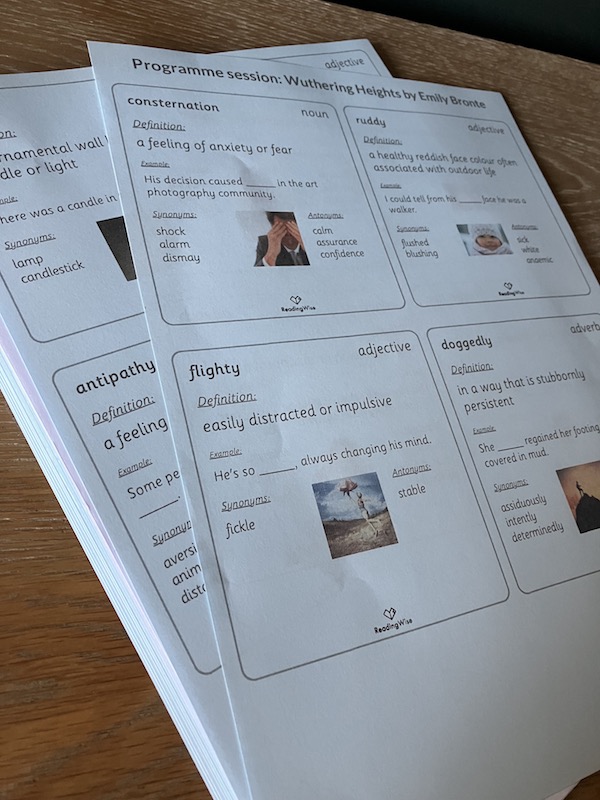
- Definition;
- Word type;
- Synonyms and antonyms;
- Example sentence;
- Image.
Check out our weekly lists every Wednesday! Click here for last week's curation...
The Vocab Module - How it Works
Find out more about our Vocab module. It's simple, online, and each learner has their own username and password. You (the teacher or facilitator) allocate the word list you'd like your group to work on… and away they go!