England's classrooms are changing fast. There are now 1.7 million EAL pupils in English schools, more than triple the number in 1997, and representing 21% of all pupils today. Over 9% of pupils in Scotland are EAL. Two in three schools have at least 5% EAL learners on their roll. Yet according to The Bell Foundation, developing academic proficiency in English can take over six years, and proficiency explains 4–6 times as much variation in attainment as ethnicity, gender, and free school meals combined. For pupils arriving later in their school journey, the challenge is even steeper. EAL learners joining in Year 6 are half as likely as their monolingual peers to reach the national average. The stakes are rising too: as of October 2025, Ofsted's updated inspection toolkit now includes a dedicated section on EAL within the Curriculum and Teaching evaluation area, meaning inspectors are explicitly asked to consider how schools support pupils at the early stages of learning English. The need for targeted, effective support has never been greater. That's exactly what we've been building.
A global challenge
The challenge of supporting multilingual learners extends well beyond England. In international schools around the world, the linguistic diversity of school communities is growing and so is the recognition that monolingual or 'English only' approaches are, as ISL Magazine puts it, "ineffective, discriminatory, and oppressive." Schools from London to the UAE to China are now creating dedicated leadership roles - heads of multilingualism - to embrace students' home languages as a right and a resource, not a barrier to be overcome. In the UAE, where over 50 languages may be spoken within a single school community, this intentional approach to linguistic identity has become a strategic priority. The lesson from international schools is clear: when pupils are empowered to draw on their full linguistic repertoire, rather than being asked to leave their home language at the door, outcomes improve, and so does belonging.
The evidence for home language support
The case for providing EAL learners with access to their home language isn't just intuitive, it's well evidenced. Linguist Jim Cummins' influential Interdependence Hypothesis established that a strong foundation in a first language accelerates, rather than hinders, the acquisition of a second. More recently, translanguaging research - associated with scholars Ofelia García and Li Wei - has shown that learners who are encouraged to draw on their full linguistic repertoire, rather than suppress their home language, demonstrate stronger comprehension, greater engagement, and faster progress in English. At the vocabulary level specifically, studies consistently find that encountering a new English word alongside its home language equivalent significantly improves retention compared to meeting it in English alone. The design of ReadingWise's EAL features reflects this evidence: home language translations are available as a scaffold, sitting alongside English rather than replacing it, offering a bridge into meaning without removing the English language challenge.
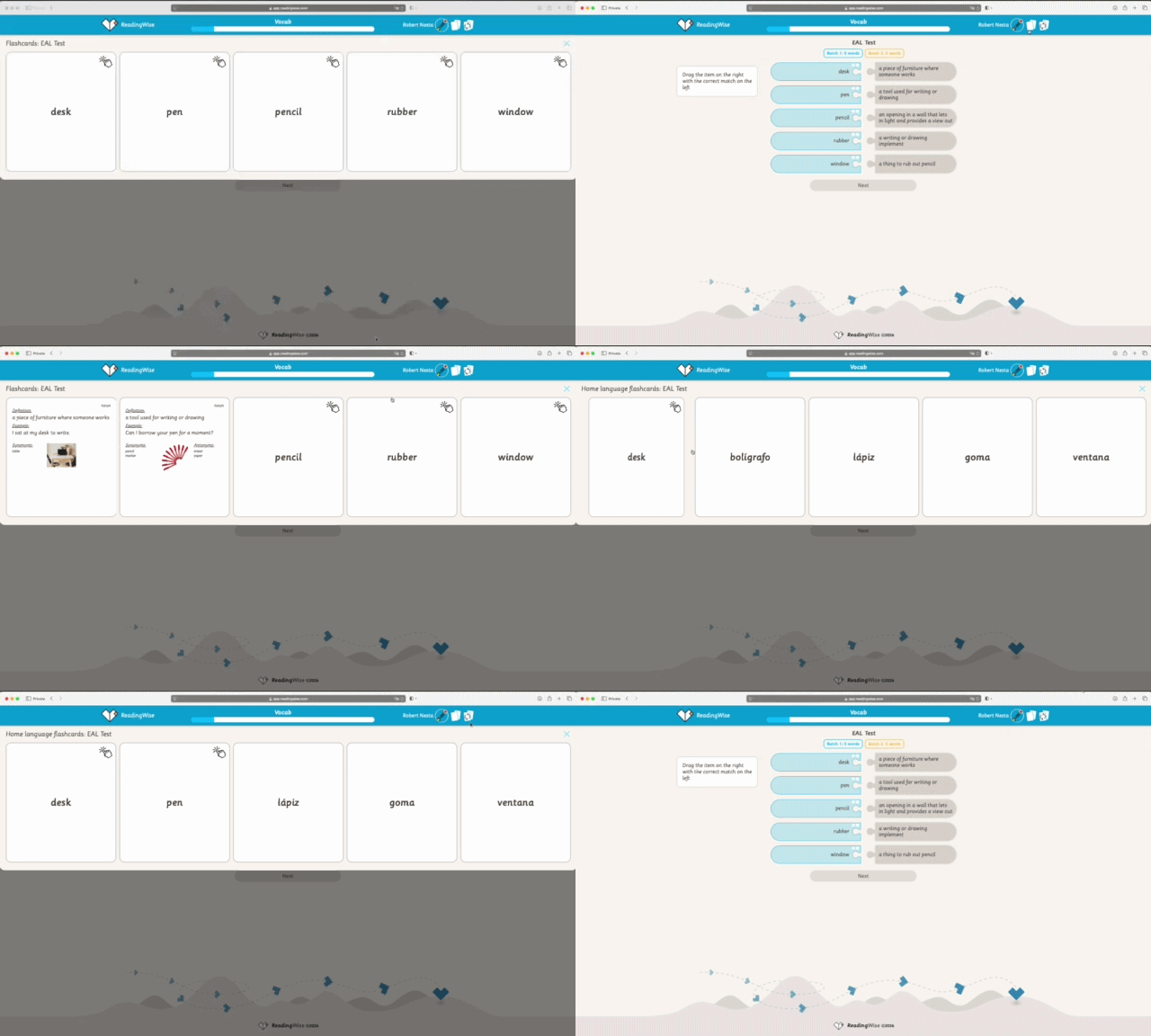
Bilingual flashcards
Learners can now flip Vocab Task flashcards between English and their home language. English sits on one side, the home language translation on the other, giving learners a bilingual starting point without removing the English challenge.
Translated definitions in Comprehension
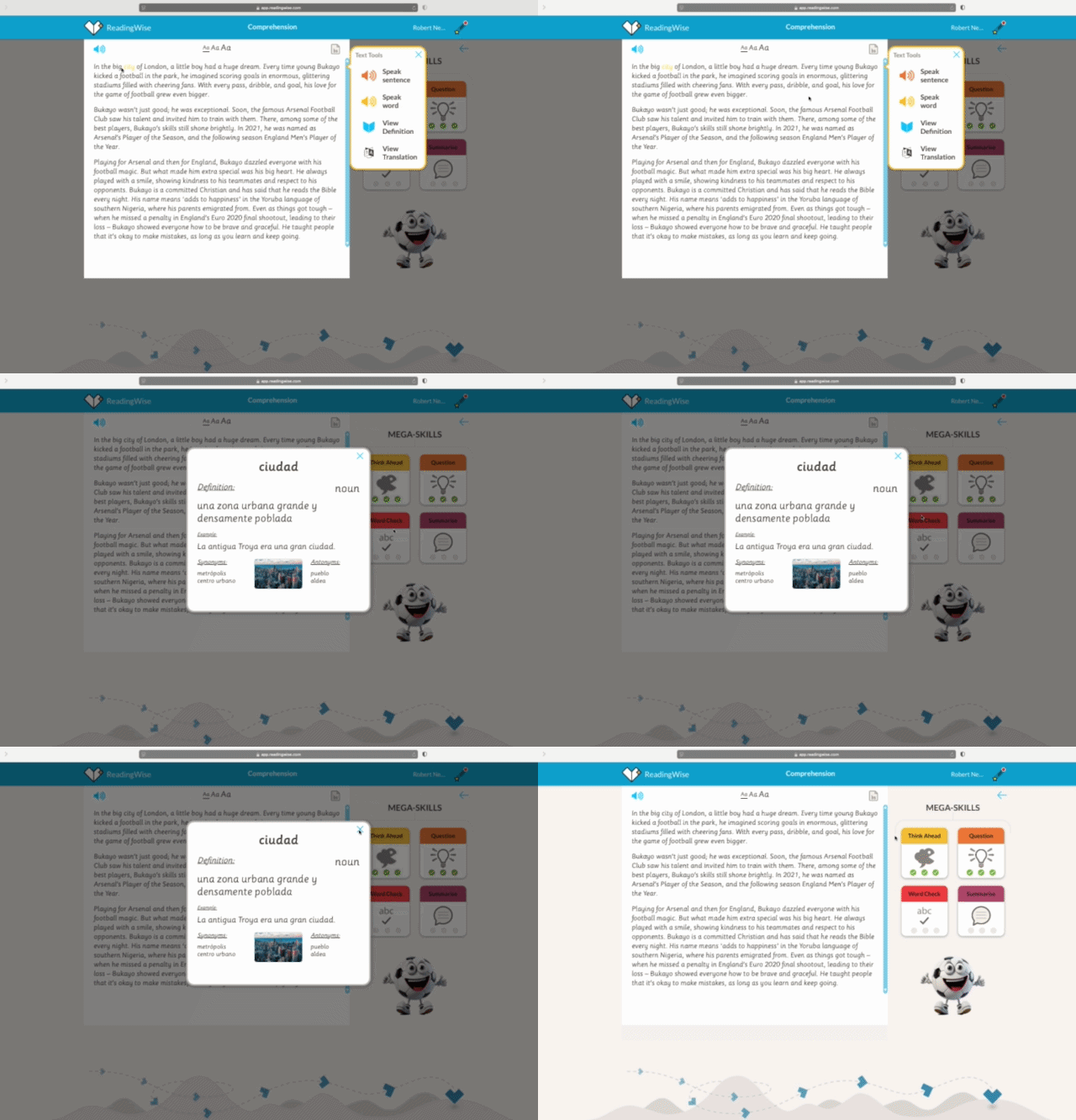
When EAL mode is active, a learner can view word definitions in their home language directly inside the Comprehension text tool. Synonyms, antonyms, and example sentences are included in the translation where available.
Automatic language detection from your MiS
For schools using Wonde, the learner's home or first language field now automatically sets the EAL Mode Language in ReadingWise. Teachers can still override this manually. No Wonde integration? That's fine. EAL mode works for all schools.
A simple on/off switch for EAL support
Two fields need to be complete to allow your EAL learners to access their home language support. First, the home language needs to be selected on the learner edit page via the 'EAL mode language' option. Where schools have synced data for example via Wonde, this data may be pre-populated depending on the sync.
Second, EAL mode is activated by a single checkbox on the learner's profile. When switched on and a support language is set, translated content becomes available. When switched off, everything works exactly as usual.
These features are designed to lower the barrier to comprehension without removing the English language challenge. Learners engage with the same content, they simply have a home language scaffold available when they need it.
Getting started
To get started, take a look at your EAL-learners edit pages. Select their EAL mode language and activate EAL mode. Now, where translations are available, support will become available in Vocab Tasks, and in the Comprehension text tools.
Supported Languages
The table below outlines the languages currently supported. For specific requests for us to prioritise a specific language or languages, please get in touch.
| Description | ISO Code | Live for Vocab Tasks | Live for Comprehension Stories |
|---|---|---|---|
| Afrikaans | af | ✅ | |
| Akan | ak | ||
| Albanian | sq | ✅ | |
| Amharic | am | ✅ | |
| Arabic | ar | ✅ | ✅ |
| Armenian | hy | ✅ | |
| Assamese | as | ||
| Azerbaijani | az | ✅ | |
| Basque | eu | ✅ | |
| Bengali | bn | ✅ | |
| Bulgarian | bg | ✅ | |
| Burmese | my | ✅ | |
| Catalan | ca | ✅ | |
| Chinese | zh-CN | ✅ | |
| Chinese (Cantonese) | zh-HK | ✅ | |
| Croatian | hr | ✅ | |
| Czech | cs | ✅ | |
| Danish | da | ✅ | |
| Dutch/Flemish | nl | ✅ | |
| Estonian | et | ✅ | |
| Finnish | fi | ✅ | |
| French | fr | ✅ | |
| Gaelic/Irish | ga | ✅ | |
| Galician/Galego | gl | ✅ | |
| Georgian | ka | ✅ | |
| German | de | ✅ | |
| Greek | el | ✅ | |
| Gujarati | gu | ✅ | |
| Hebrew | iw | ✅ | |
| Hindi | hi | ✅ | |
| Hungarian | hu | ✅ | |
| Icelandic | is | ✅ | |
| Igbo | ig | ✅ | |
| Indonesian/Bahasa Indonesia | id | ✅ | |
| Italian | it | ✅ | |
| Japanese | ja | ✅ | |
| Kannada | kn | ✅ | |
| Kazakh | kk | ✅ | |
| Korean | ko | ✅ | |
| Kurdish | ku | ✅ | |
| Lao | lo | ✅ | |
| Latvian | lv | ✅ | |
| Lingala | ln | ||
| Lithuanian | lt | ✅ | |
| Macedonian | mk | ✅ | |
| Malay/Indonesian | ms | ✅ | |
| Malayalam | ml | ✅ | ✅ |
| Marathi | mr | ✅ | |
| Mongolian (Khalkha) | mn | ✅ | |
| Nepali | ne | ✅ | |
| Norwegian | no | ✅ | |
| Oriya | or | ✅ | |
| Oromo | om | ✅ | |
| Panjabi | pa | ✅ | ✅ |
| Pashto/Pakhto | ps | ✅ | ✅ |
| Persian/Farsi | fa | ✅ | ✅ |
| Polish | pl | ✅ | ✅ |
| Portuguese | pt-PT | ✅ | ✅ |
| Portuguese (Brazil) | pt-BR | ✅ | |
| Romanian | ro | ✅ | ✅ |
| Russian | ru | ✅ | |
| Scots Gaelic | gd | ✅ | |
| Serbian/Croatian/Bosnian | sr | ✅ | |
| Shona | sn | ✅ | |
| Sinhala | si | ✅ | |
| Slovak | sk | ✅ | |
| Slovenian | sl | ✅ | |
| Somali | so | ✅ | ✅ |
| Spanish | es | ✅ | ✅ |
| Swahili/Kiswahili | sw | ✅ | |
| Swedish | sv | ✅ | |
| Tagalog/Filipino | fil | ✅ | ✅ |
| Tamil | ta | ✅ | |
| Te reo Māori | mi | ✅ | |
| Telugu | te | ✅ | |
| Thai | th | ✅ | |
| Tigrinya | ti | ✅ | |
| Turkish | tr | ✅ | |
| Ukrainian | uk | ✅ | |
| Urdu | ur | ✅ | ✅ |
| Uzbek | uz | ✅ | |
| Vietnamese | vi | ✅ | |
| Welsh/Cymraeg | cy | ✅ | ✅ |
| Yoruba | yo | ✅ | |
| Zulu | zu | ✅ |
Interactive Map from the ONS (England and Wales only)
This is an interesting interactive map by language - search for a language and see where it is spoken and by how much of the population.